Revolutionizing emergency response: The history of NORA
Berte Gressberg
17 January 2024
4 min read
NORA was created in the aftermath of the 2011 terror attacks in Oslo and on Utøya Island, where 77 people lost their lives. In the official investigation, the Norwegian police were strongly criticized for their lack of effective communication and situational awareness. The mobile network was quickly overwhelmed, and communication between local police units and the Emergency Response Unit failed due to incompatible systems and infrastructure. The absence of real-time geographic information further delayed the response at a time when rapid coordination was critical.
The commission tasked with investigating the events described the situation as “the story of the resources that did not find each other” and concluded that Norwegian police needed to adopt and implement modern digital tools to operate effectively in crisis situations.
Following this, the Emergency Response Unit approached Teleplan Globe, based on the company’s long-standing expertise in developing mission-critical communication and situational awareness systems for the Norwegian Armed Forces and allied defence and security organizations. While existing military-grade platforms offered robust capabilities, they were too complex and too costly for law enforcement’s operational needs. The request was clear: a simpler, more agile solution that could run on commercially available devices like smartphones and tablets, across all operating systems.
What followed was the development of NORA – a secure, persistent communication and coordination platform, specifically tailored to the needs of emergency responders. It combined advanced geospatial functionality with intuitive user design, while adhering to the highest standards of information security.
At the time, many police units across Europe relied on consumer apps such as WhatsApp, Signal, and Telegram to coordinate operations. These platforms, while convenient, operated on third-party servers and did not meet legal or security requirements for handling sensitive data. NORA was built to solve this problem. With end-to-end encryption and modern architecture, it gave organizations full control by allowing deployment in private or public cloud environments.
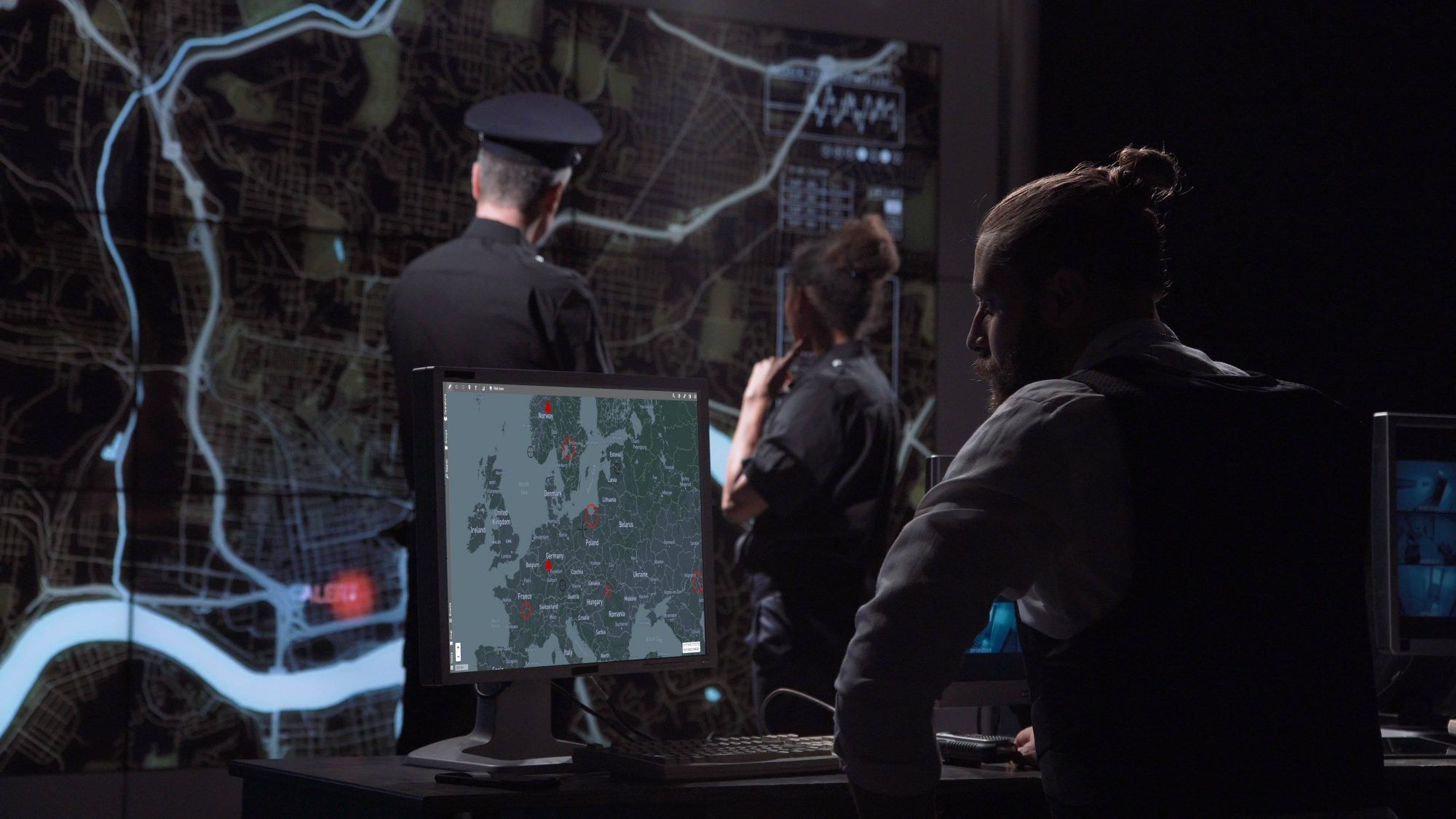
The system included a powerful Geographic Information System (GIS), providing layered maps with floor plans, assembly points, evacuation routes, and other mission-critical information. Built-in drawing tools enabled users to plan in real time, track individuals or areas of interest, and share operational updates instantly. Visual content such as photos and video could be transmitted directly from the field, providing accurate context to all involved.
As development progressed, advanced capabilities were added, including:
• Real-time weather overlays
• Line-of-sight and coverage analysis
• Satellite data integration
• Live mapping and collaborative planning
The roadmap for NORA also included features related to predictive policing, big data analytics, and machine learning – all intended to support better decision-making and proactive readiness.
To ensure operational flexibility, NORA was designed for interoperability. An open API enabled seamless integration with existing command-and-control platforms, GIS tools, intelligence databases, and external sensors. For organizations operating on Microsoft infrastructure, full Active Directory support was implemented. Teleplan Globe also initiated development of an integration with Skype for Business, allowing cross-platform communication while preserving the persistent nature of NORA’s data model.
A Platform Forged from Experience
From the lessons learned in 2011, NORA was built to ensure that resources do find each other – when it matters most. With a modern architecture, intuitive interface, and mission-critical features, NORA is now a trusted tool for responders who operate under pressure, in complex and dynamic environments.