Forged in the field: The history of FACNAV
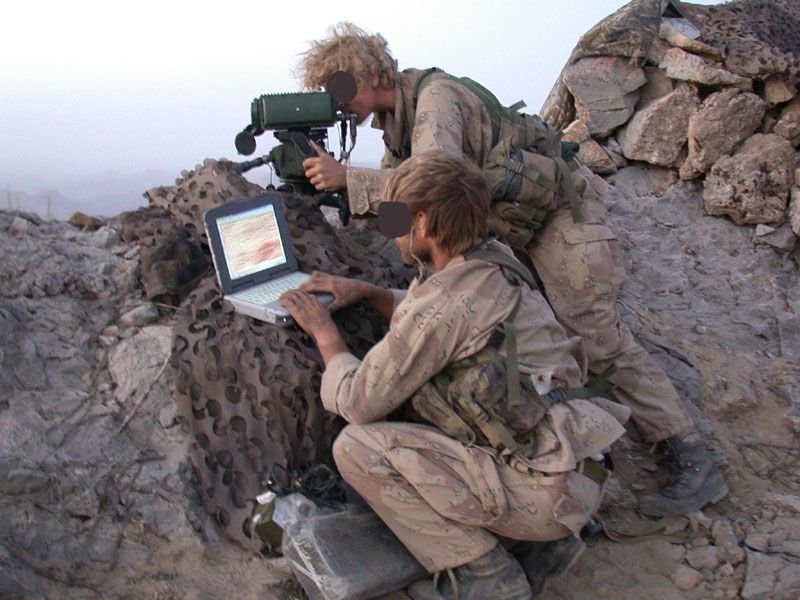
Norwegian soldiers operating in Afghanistan in early 2006
Berte Gressberg
30 June 2025
4 min read
In late 2006, we received a request that would become a defining moment for our company. Norway’s Special Forces, preparing for deployment to Afghanistan, needed a capability that didn’t exist yet—something that could dramatically improve how they coordinated close air support in fast-paced, high-risk operations.
After the attacks on 9/11, NATO invoked Article V for collective defence for the first time in history. The nature of military operations shifted, and with it came a new level of urgency, complexity, and risk. Norwegian Special Forces were among the first to deploy, working closely with allied units across national and service boundaries. Their missions demanded new tools, and new ways of thinking. One of the most pressing needs was a way to digitally coordinate air support—identifying targets precisely, avoiding friendly fire, and doing it all within seconds, not minutes.
At the time, the standard was still paper maps and voice communication over radio. In practice, this meant it could take up to 30 minutes from identifying a target on the ground to getting a response from a pilot in the air. That delay introduced not only inefficiency but also significant risk.
The request that came to us from Forsvarets Spesialkommando (FSK) was clear: build a system that could support the entire process of receiving a mission, navigating to the target, identifying and confirming targets, calling in air support, and safely returning—all with better speed, precision, and security. The system that would come to life was named FACNAV, short for Forward Air Control and Navigation.
What followed was an intense seven-month collaboration between a small group of developers at Teleplan and a dedicated team from the Special Forces. Together, we developed the first version of FACNAV under tight deadlines and with a constant eye on real-world needs. The final build was hand-delivered to Oslo Military Airport by Jan Nyegaarden—then project manager, now CEO of Teleplan Globe—on the same day the unit was scheduled to deploy. Just two weeks later, FACNAV was in operational use in Afghanistan.
FACNAV allowed ground operators to send digital coordinates and target data directly to pilots, drastically reducing the time between identification and action. It improved both safety and precision. The system could even trigger alerts if friendly forces were detected inside a strike zone—helping prevent tragic accidents. The improvement was measurable: what used to take 30 minutes now took just four.
Beyond the technical innovation, what made this project stand out was the way it was developed. The team set high usability standards from the beginning. One requirement was that a soldier should be able to learn the system in under an hour. Another was that it had to be operable via touchscreen—without a mouse—even in pitch black conditions, under heavy gear, after jumping from high altitudes. It had to be adaptable, intuitive, and rugged. Today, these may sound like standard expectations, but in 2006–2007, they were groundbreaking. For reference, the first iPhone wasn’t even released until mid-2007.
FACNAV was a game changer in its own right. But just as importantly, it shaped how we work to this day. The project established many of the core principles we still follow at Teleplan Globe. We believe in close, continuous collaboration with end users. Our developers still go into the field alongside operators. We still host annual workshops where users come to our headquarters in Lysaker to test, challenge, and improve the systems we build. And we continue to believe that the best tools are those created in partnership with the people who need them most.
FACNAV began as a mission-critical response to an urgent operational need. But it became something more: a blueprint for how military technology can be built—with trust, with purpose, and with those who know the mission best.